
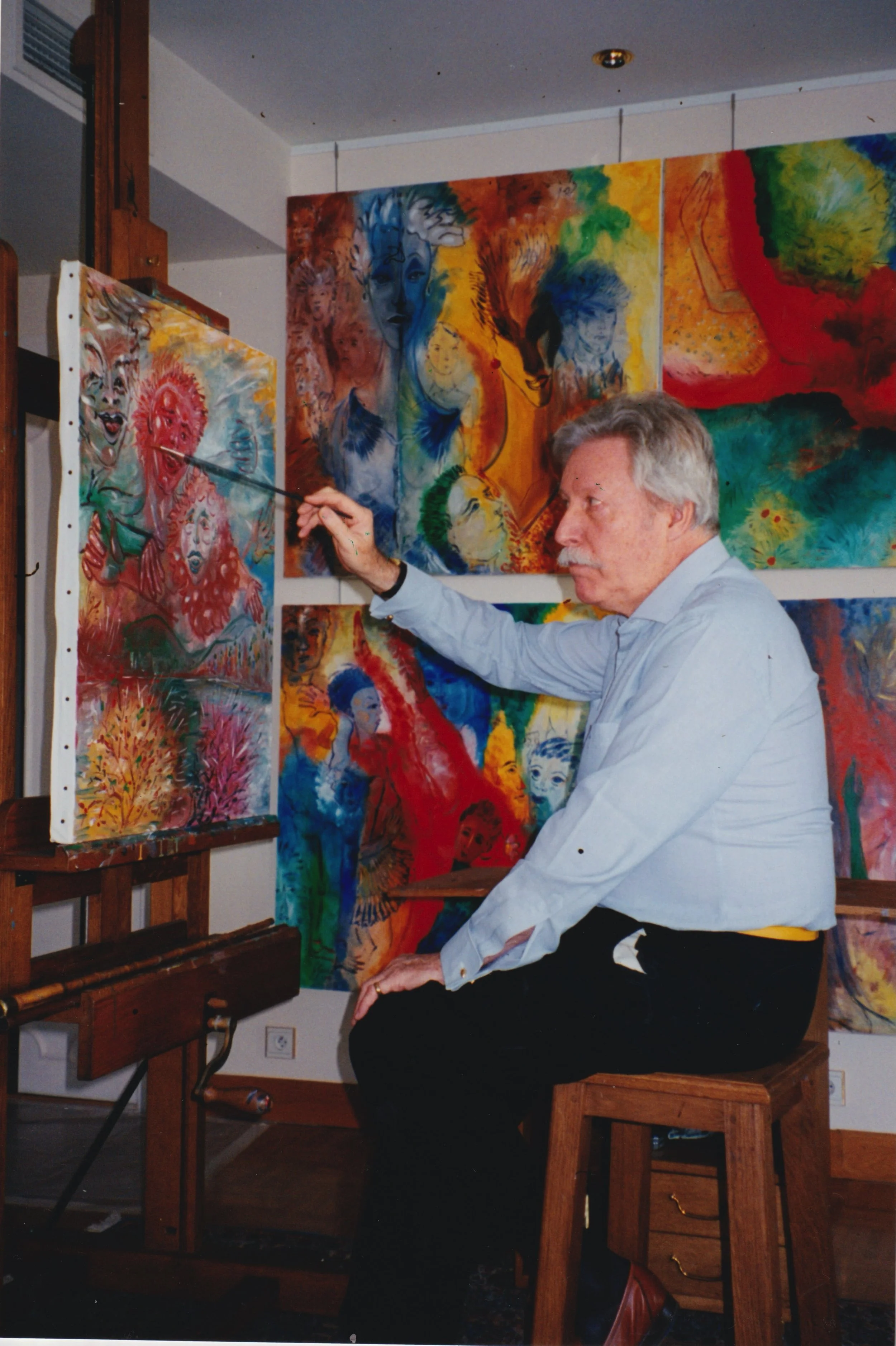
The Painter
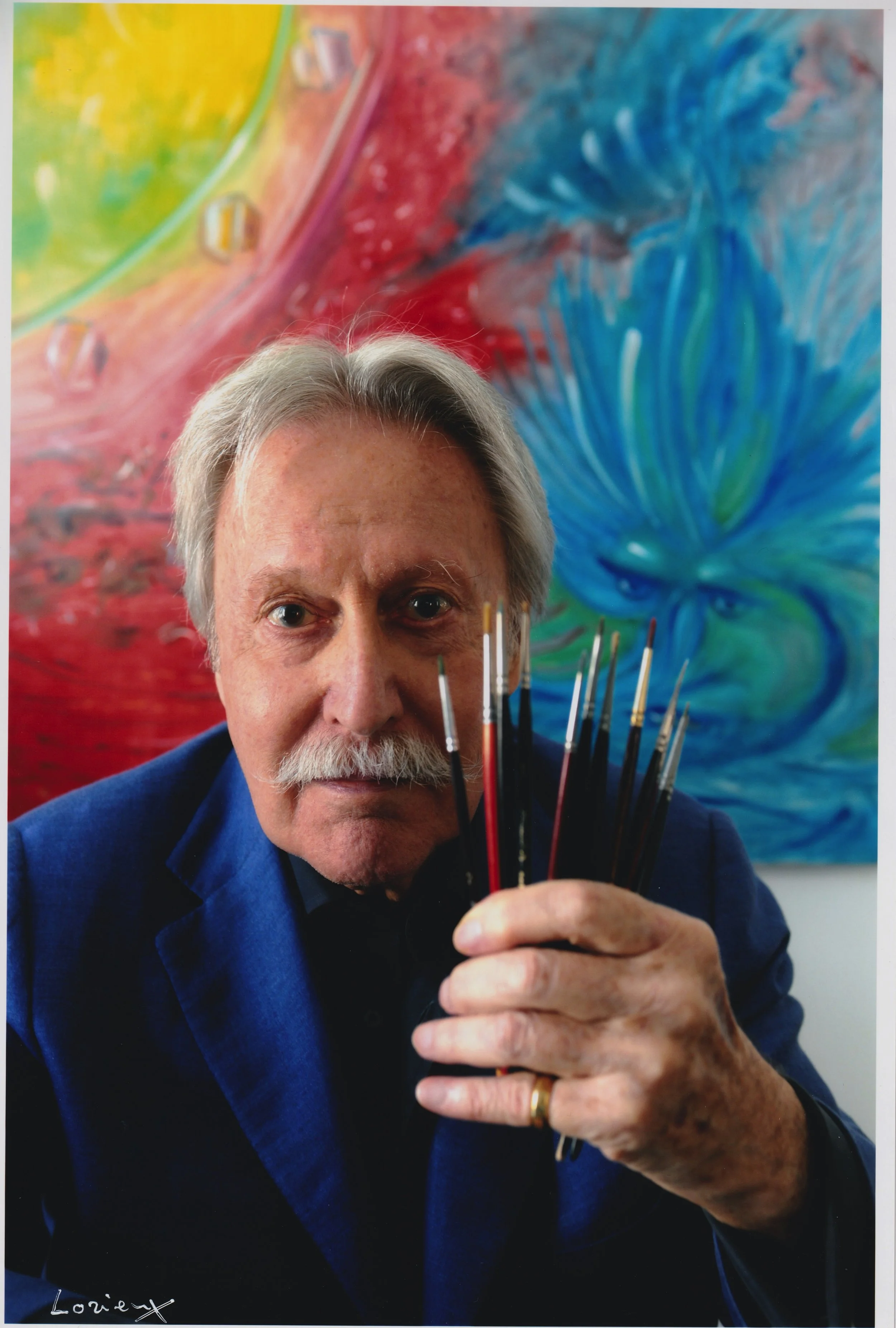
Painting was Gérald Genta's central and lifelong passion. He came to it as a child and continued until the end of his life, working almost every day and in every country he travelled to. A watch design had to answer to a movement, a case, a client and a deadline. A canvas answered to nothing, and it was on canvas that he worked entirely without constraint.
Beginnings
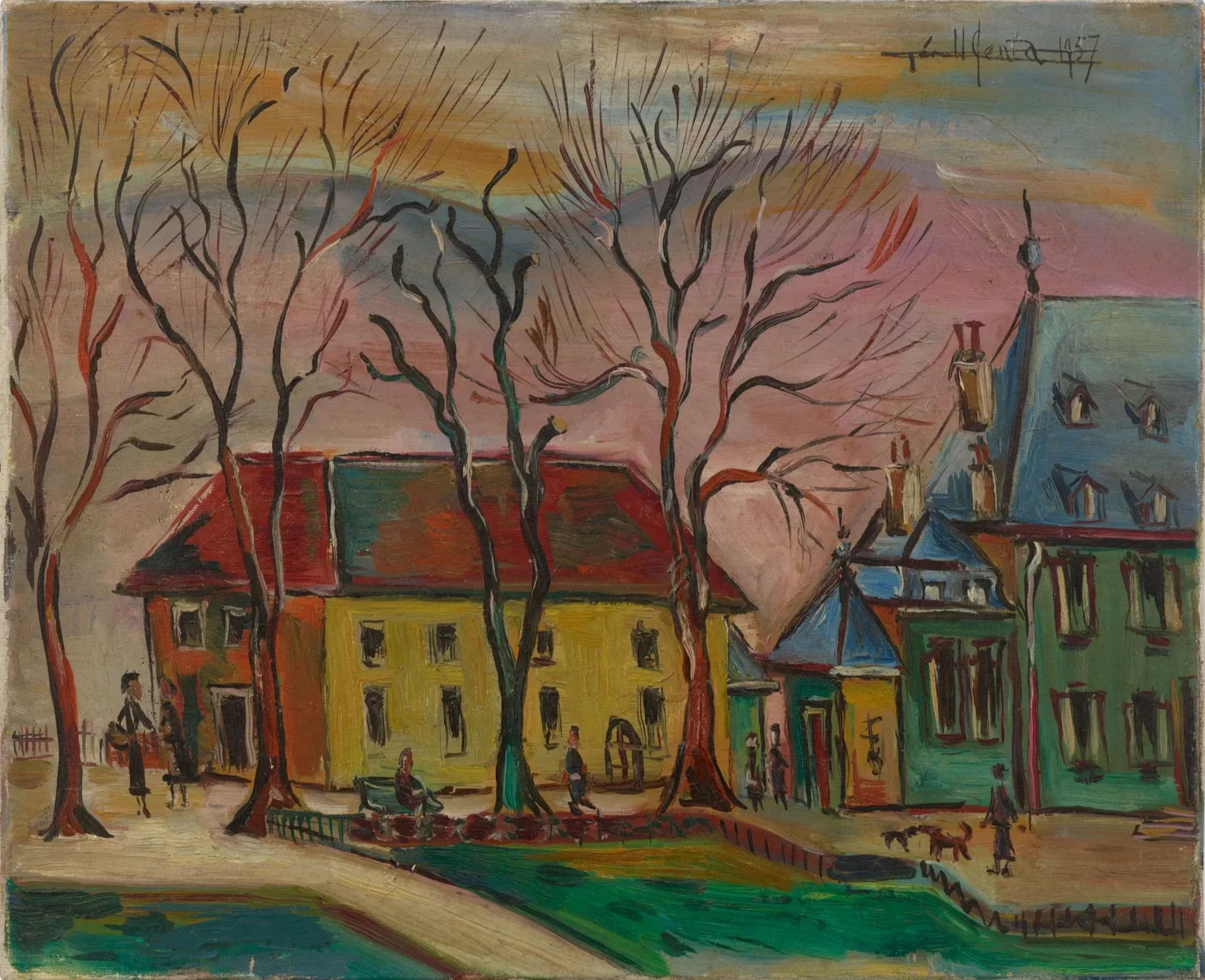
Genta was born in Geneva on 1 May 1931. He drew and painted from childhood, making small portraits and painting the scenery around him, and he came from a family with no means to indulge it. He trained instead as a goldsmith and jeweller, earning a Swiss federal diploma. He never studied painting formally. He worked by instinct throughout his life, and the absence of training is visible in the work as freedom rather than as limitation.
Painting was his oxygen
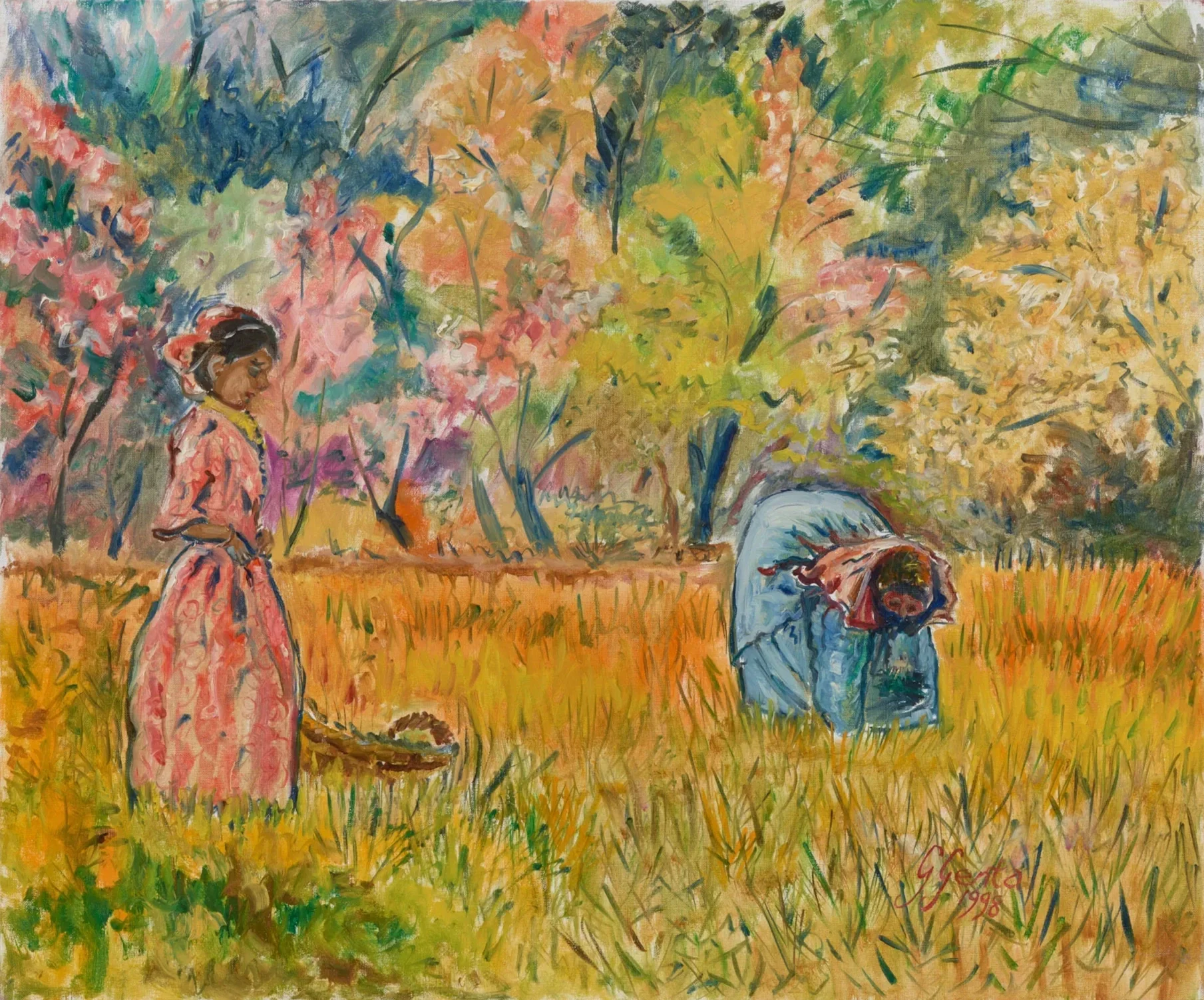
From the 1950s onwards his subjects were drawn directly from what surrounded him: landscapes, still lifes and portraits. The Mediterranean recurs, as do classical architecture and the proportions of car design. He painted in oil on canvas, and he painted consistently, returning to the same motifs over long periods and treating each return as a fresh problem rather than a repetition.
Refraction
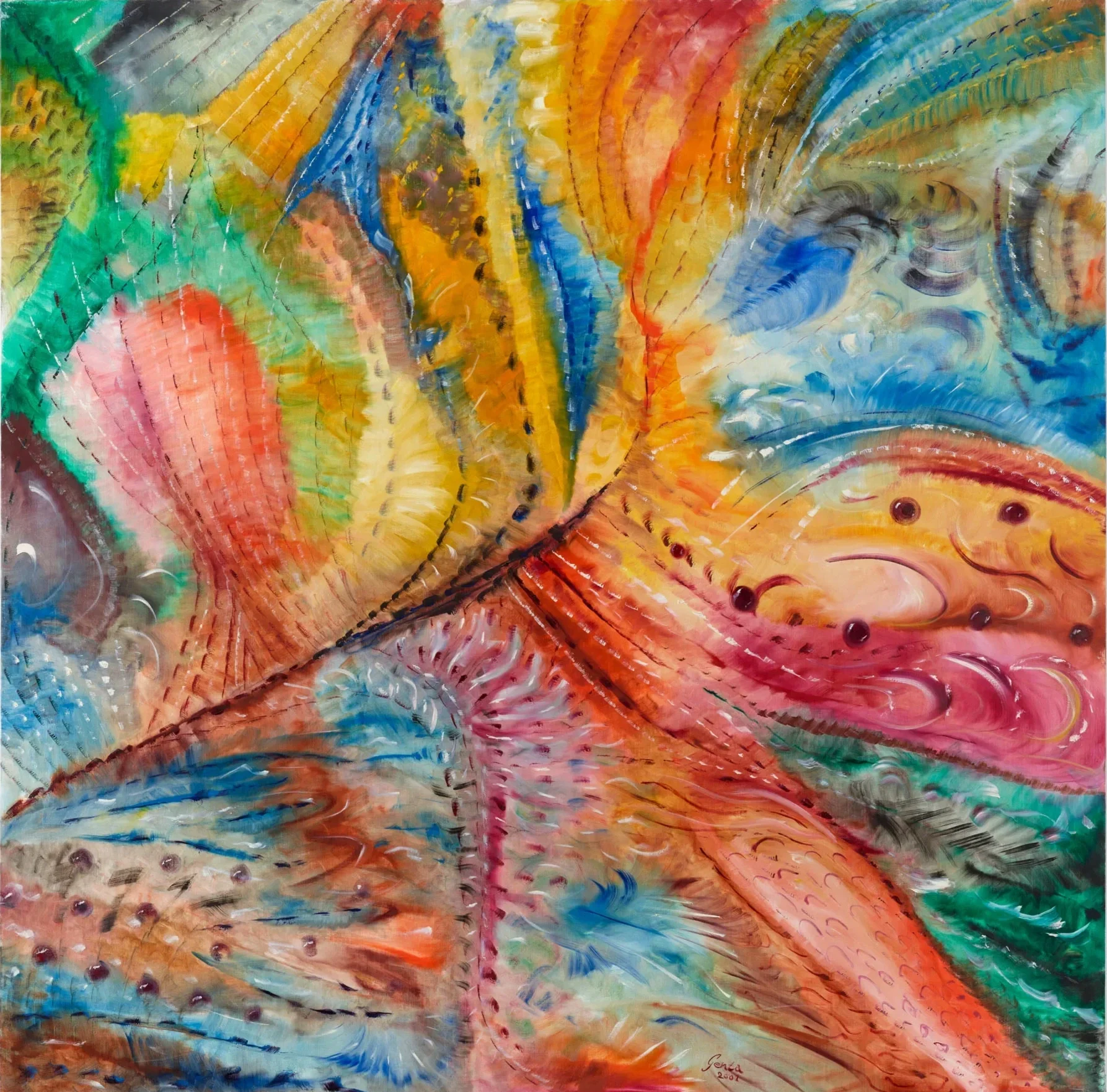
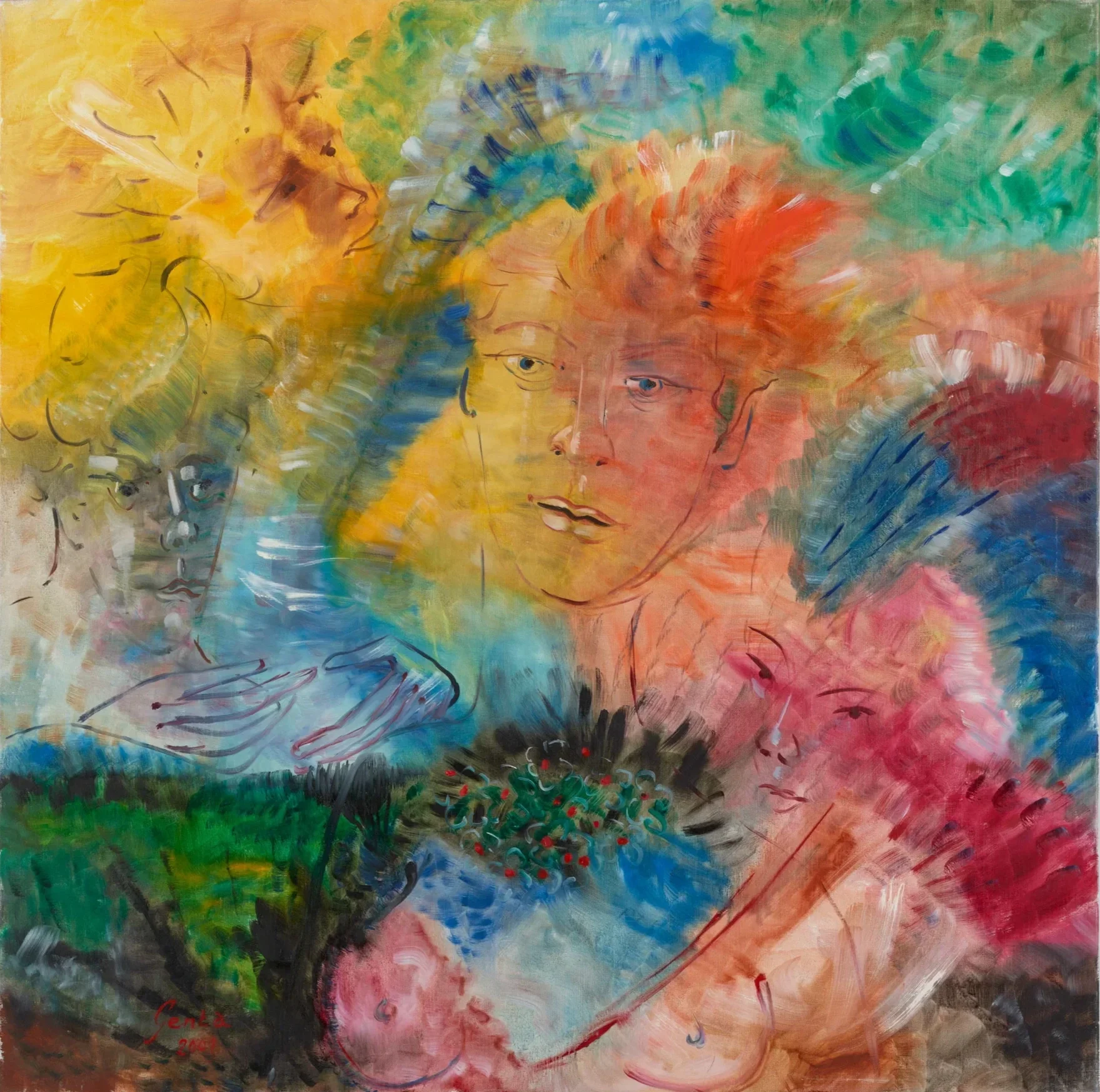
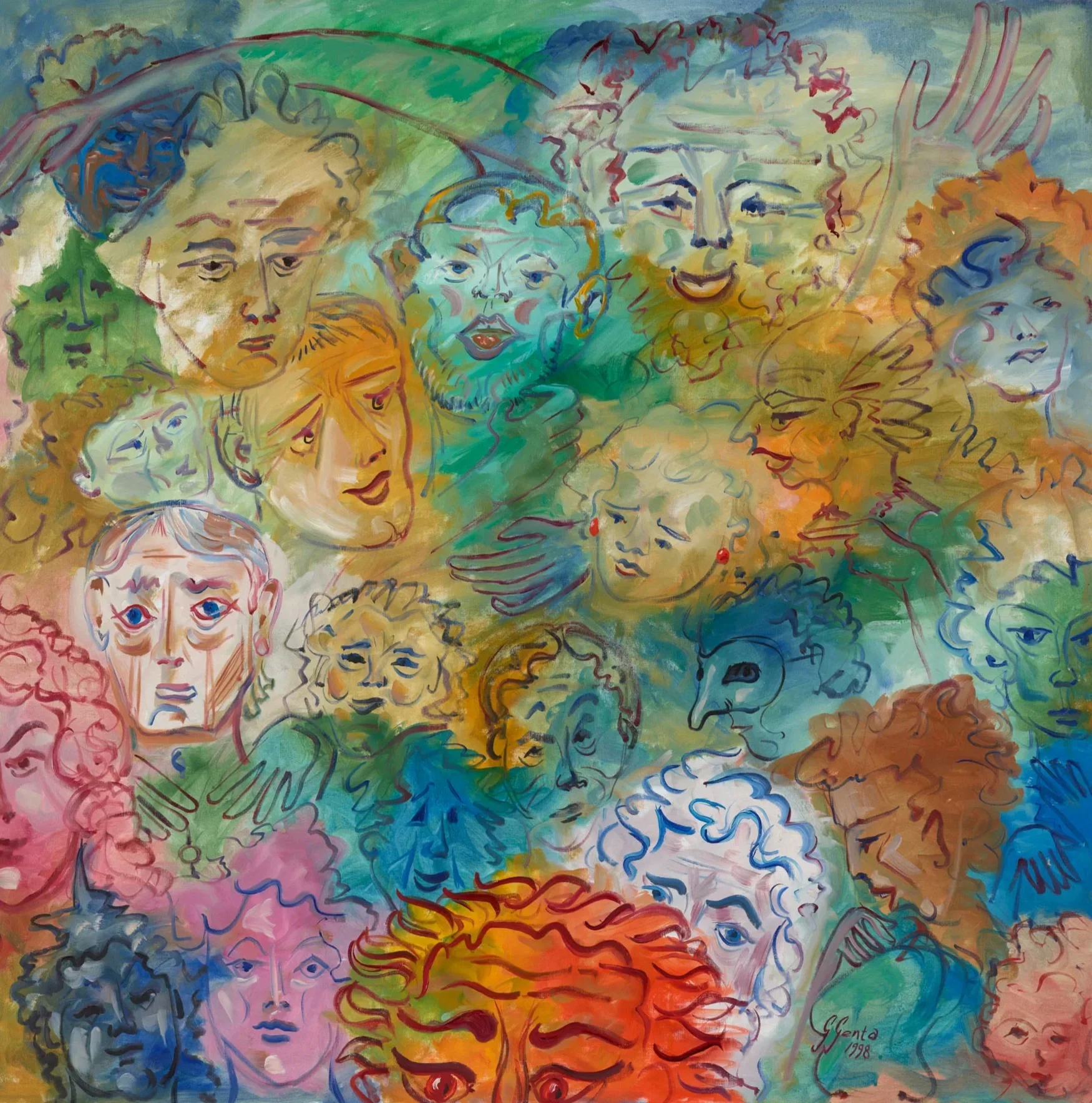
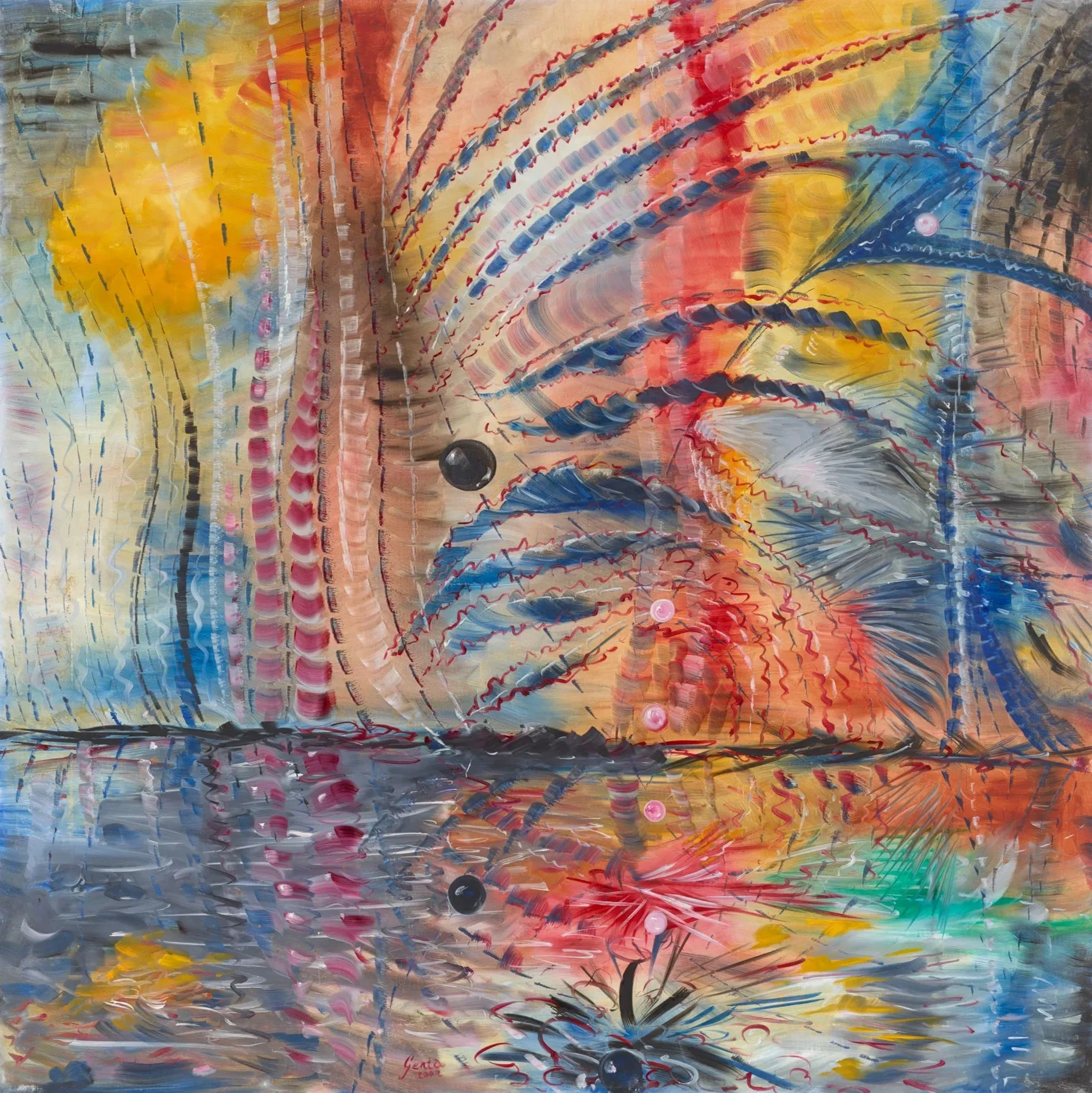
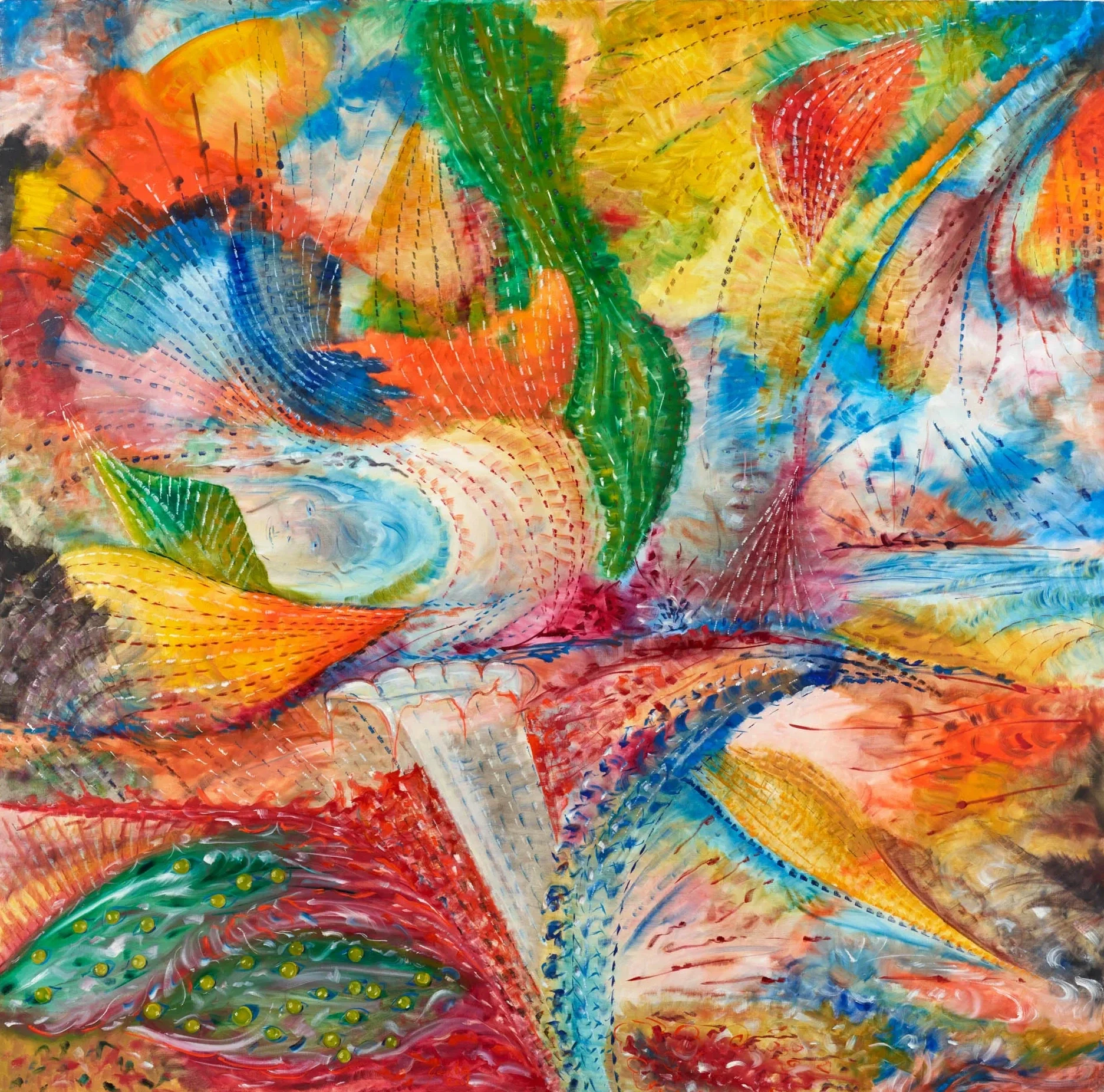
From the 1990s the subjects began to break apart. In the Faces works, mask-like heads emerge from kaleidoscopic grounds, each carrying a distinct expression. The paintings that followed abandoned description altogether. What remained was colour and contour, organised into oscillating fields, and this is the direction his work continued in until the end of his life.
Painting without constraint
In 1999 Genta sold his company. For the first time since he left school at fourteen he was answerable to no client, no production schedule and no commercial calendar, and he spent the twelve years that followed at the easel. The paintings of this period are the most sustained body of work he ever made and the most freely arrived at. Figuration falls away almost entirely, colour is left to carry the composition on its own, and the canvases become more assured the further they move from description. He painted until shortly before his death in August 2011.
The Collection
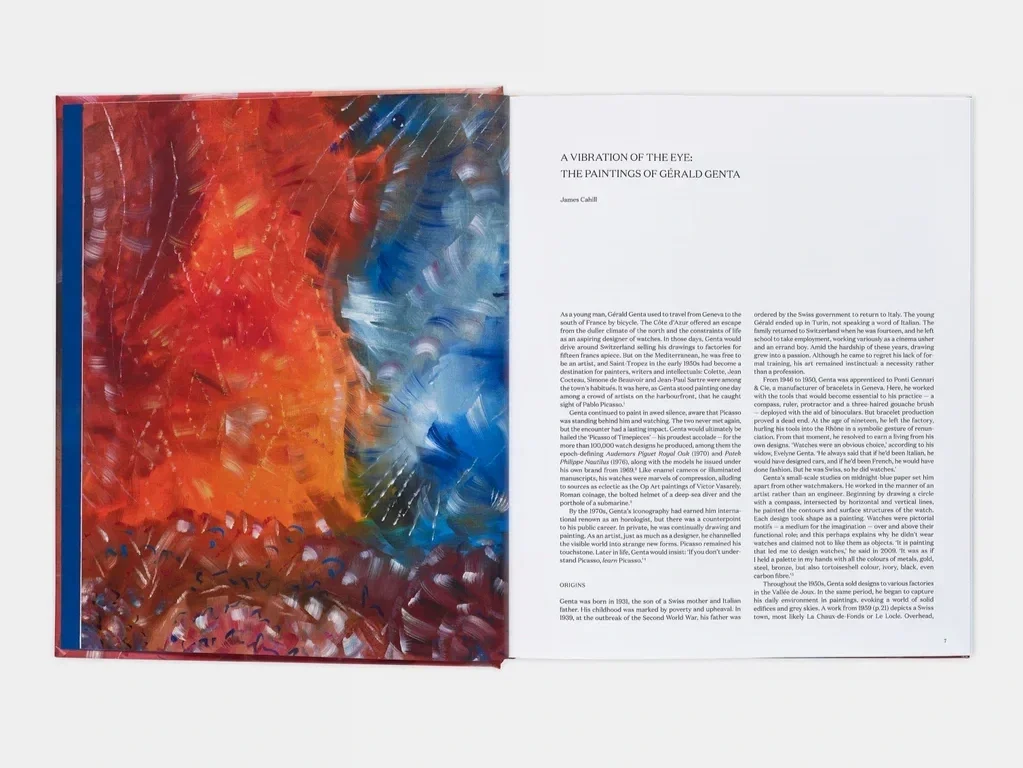
The Association holds over 300 of Gérald Genta's paintings, catalogued and conserved alongside the design archive. In February 2025 HENI published Gérald Genta, a monograph of 396 pages illustrated with 359 works and introduced by the British art critic and writer James Cahill. The paintings were shown at HENI Gallery in London in June 2026.